WHICH ROMAN SOURCES
MATTER?
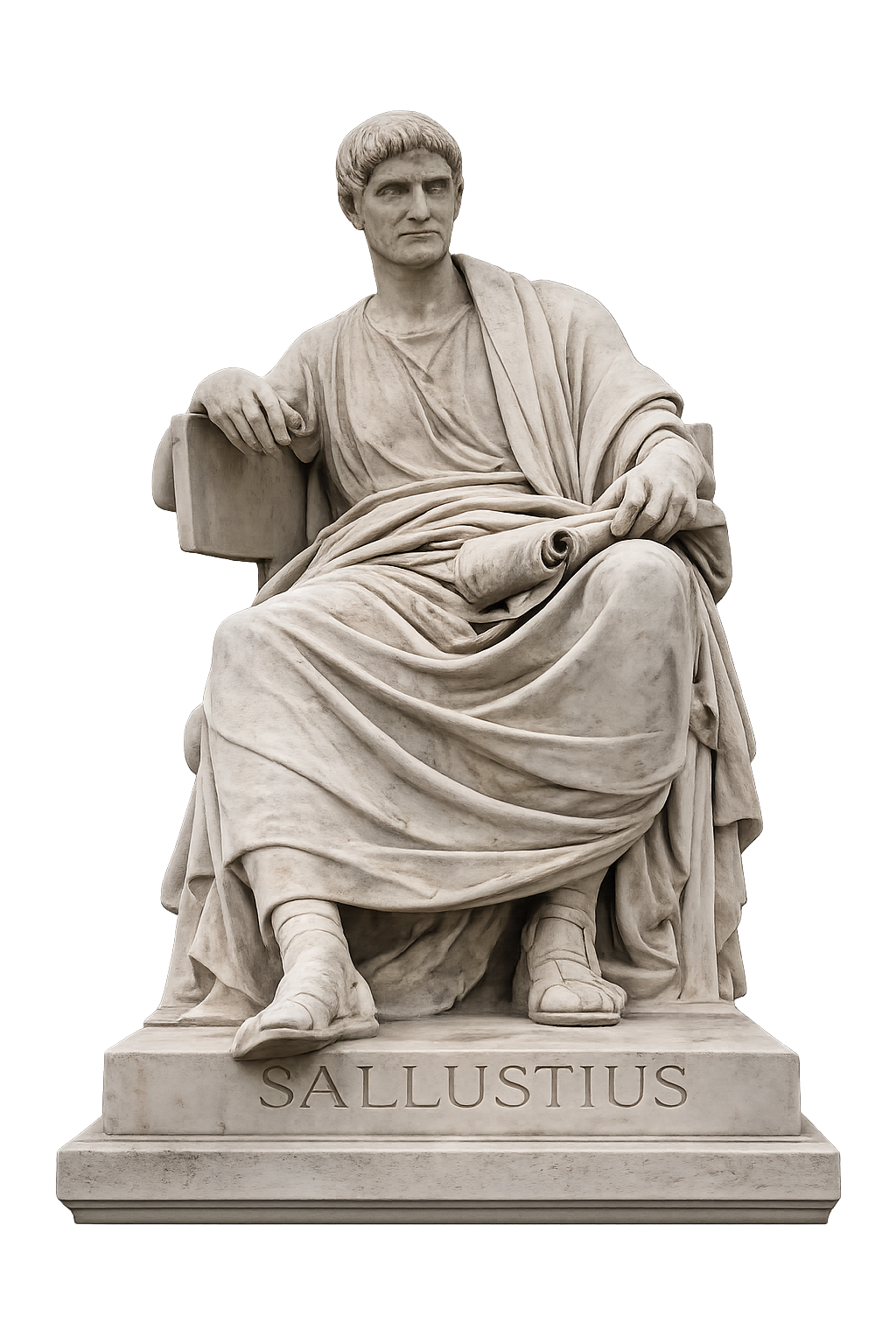
Sallust
Sallust was a Roman politician and historian of the late Republic. He is especially valuable because he wrote close to the age of Caesar and the collapse of republican politics. His best-known surviving works are The Conspiracy of Catiline and The Jugurthine War, both of which focus on political corruption, ambition, factional conflict, and moral decline in Rome. He is often read not just for facts, but for his sharp interpretation of how Roman politics was breaking down.
Gaius Sallustius Crispus 86 BCE – 35/34 BCE.
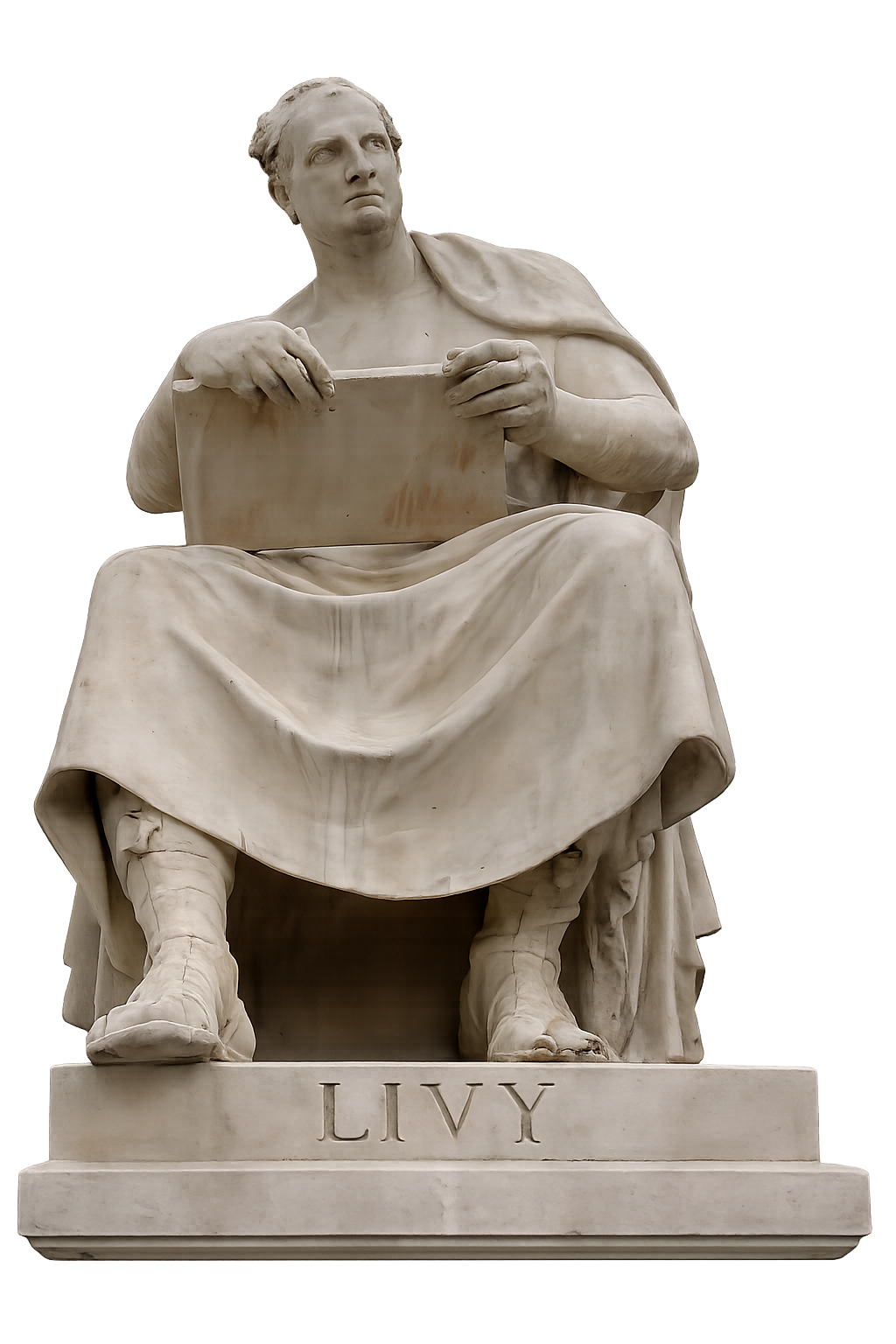
Livy
Livy was one of Rome’s greatest historians and wrote the massive history Ab Urbe Condita (“From the Founding of the City”). This work traced Rome’s story from its legendary beginnings down into Livy’s own age under Augustus. Although much of it is lost, the surviving books are fundamental for early and middle Republican history. Livy wrote less as an eyewitness political operator than Sallust or Tacitus, but he is indispensable for Rome’s institutions, wars, civic ideals, and the moral lessons Romans drew from their past.
Titus Livius 59/64 BCE – 17 CE.
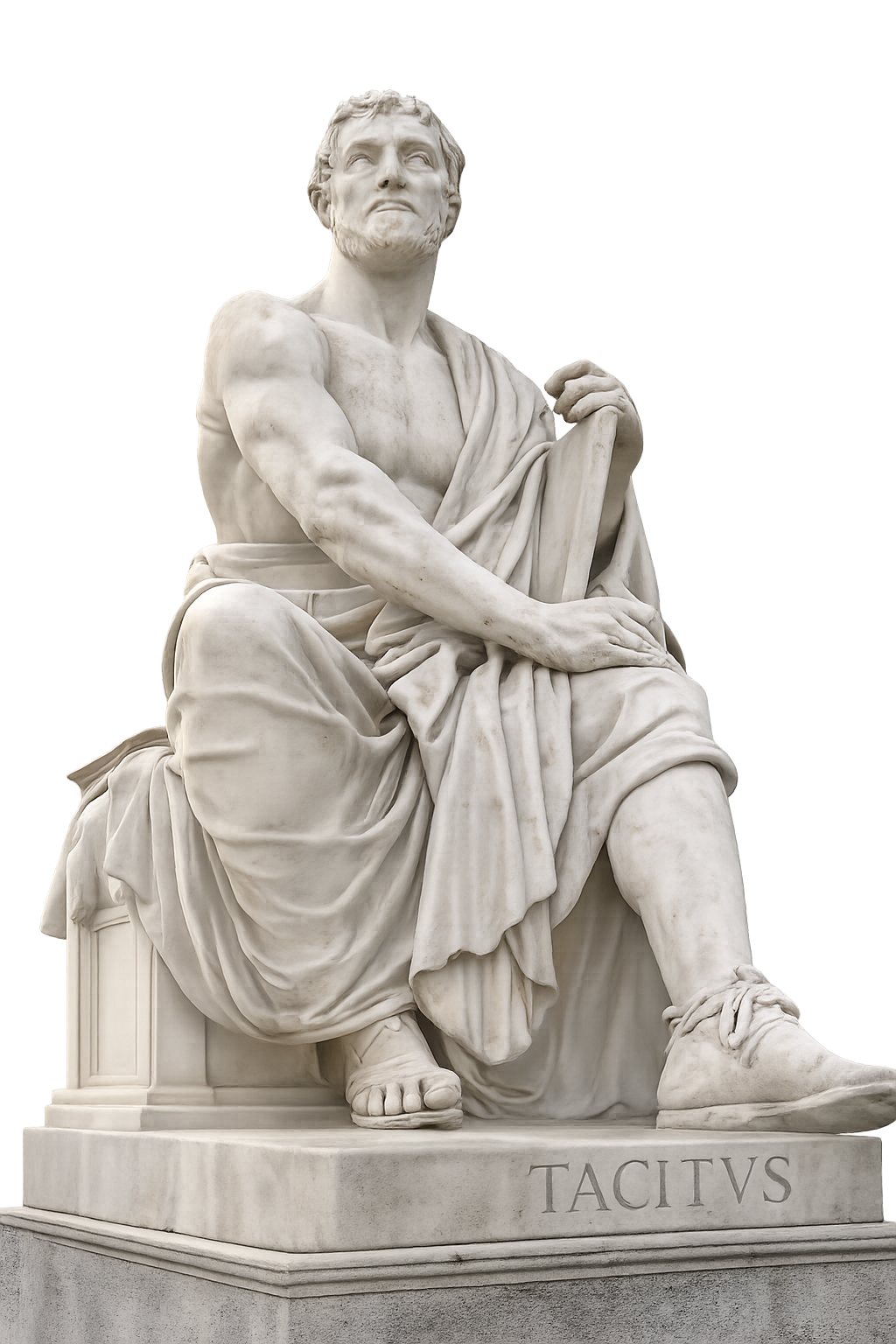
Publius Cornelius Tacitus 56 CE – c. 120 CE.
Tacitus
Tacitus was a senator, orator, and historian, often regarded as the greatest Roman historian in Latin. His major historical works are the Histories, which cover the Roman Empire from 69 to 96 CE, and the Annals, which treat the earlier imperial period from 14 to 68 CE. He is prized for political analysis, psychological insight, and his skeptical treatment of imperial power. For the Julio-Claudian and Flavian periods, he is one of the most important surviving primary sources.
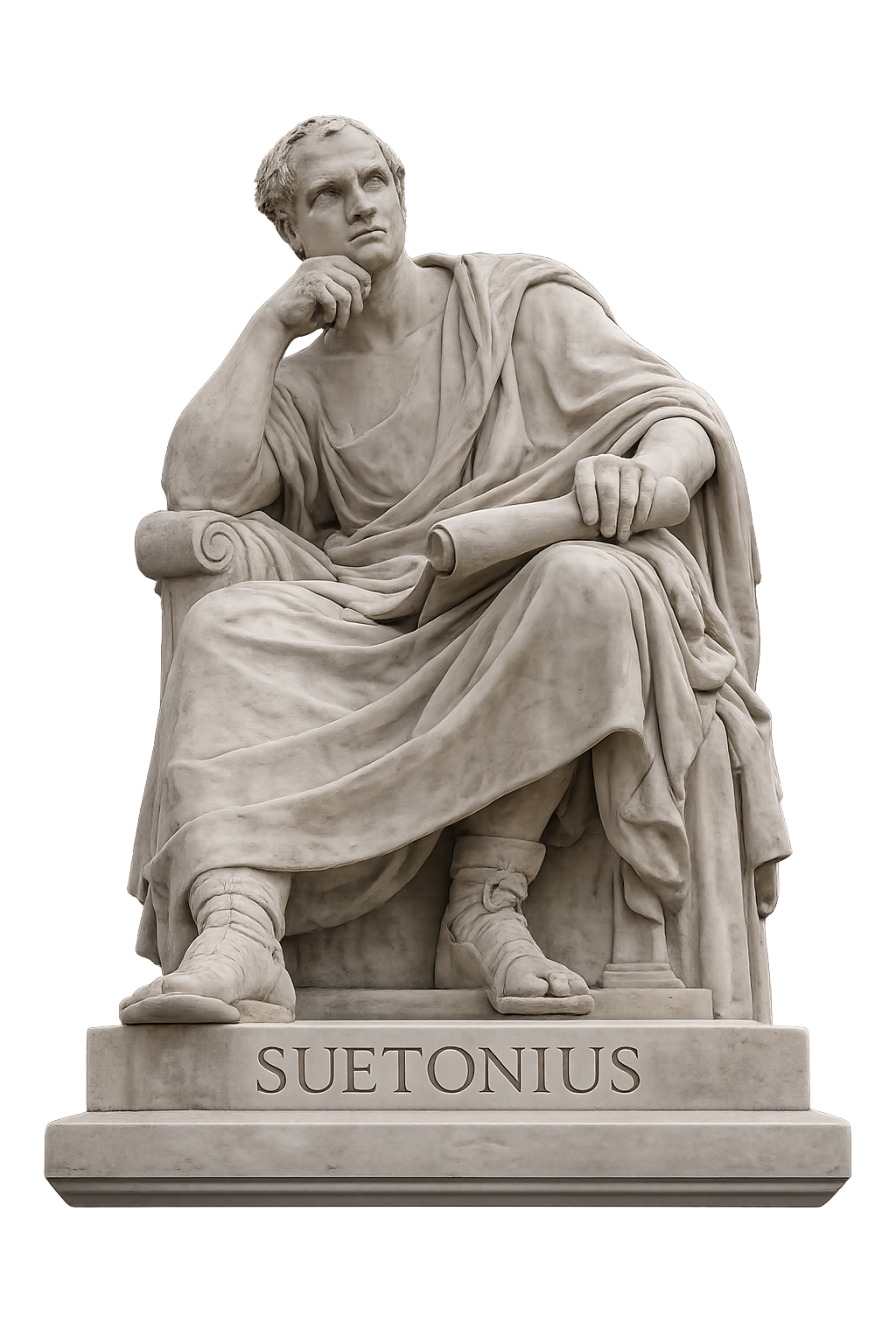
Gaius Suetonius Tranquillus 69 CE – after 122 CE.
Suetonius
Suetonius was a Roman biographer and antiquarian rather than a narrative historian in the strictest sense, but he remains a major primary source for Roman history. His most famous work, De Vita Caesarum (Lives of the Caesars), gives biographies of Julius Caesar and the first 11 Roman emperors. He also wrote De Viris Illustribus, on notable literary figures. Suetonius is especially useful for court life, personality, scandal, habits, and anecdotal material that more formal historians often omit, though he must be used carefully because of his taste for gossip and character detail.